Showing posts with label Pasta. Show all posts

Spring Vegetable Pouches


From the million-copy bestselling author of Cuisine Minceur. Over 140 exquisite recipes fuse traditional flavors with the global influences that are redefining French cuisine, all with astonishingly low calorie counts.

This book is the mecca for healthy scrumptious recipes. Tons of mouth watering photos with easy to follow directions. I would say this is the go-to book for people who want to eat healthy, but still want foodie quality food. Get yours here: Eat Well and Stay Slim: The Essential Cuisine Minceur

So today I have adapted a recipe from the book. With some changes of course.  These over-sized ravioli are scrumptious and nice and light. so great for the waistline. Enjoy! 

Spring Vegetable Pouches
adapted from  Eat Well and Stay Slim

1/2 cup peeled and shredded carrots
1/4 cup celery
1/2 cup sweet onion, sliced
1/2 cup mushrooms, sliced
1/2 Tbsp. olive oil
1 tsp fresh tarragon, finely chopped
8 large won ton wrappers - or fresh squares of pasta dough
1 3/4 cup vegetable stock
salt and pepper to taste
fresh tomatoes and chives for garnish

Cut up your veggies. 
In a medium-sized covered saucepan, gently sweat the carrots in the olive oil for 3 minutes, then add the mushrooms an sweat for 3 minutes more. Season with salt and pepper. Stir in the finely chopped tarragon and set aside. 
Place 4 squares of pasta dough or large won ton wrappers.on your work surface. Place some of the cooled vegetables in the center of each pasta square. 
Using a pastry brush, lightly brush the edges of each square with water. Lay another pasta square on top and then gently press the edges of the pasta squares together, making sure that there are no openings. 

Add your vegetable stock to a large saucepan and bring to a boil. Add ravioli and cook one at a time for 5 minutes. Serve, topped with fresh tomatoes and chives! 

Italian Chicken Noodle Soup


The cold and flu has hit my house hard. I am still healthy, but my hubby not so much, and my daughter is sick too, which means she comes to stay with me so I can nurture her back to health and make her my famous Chicken Noodle Soup. 

I have been told many times that I make the best chicken noodle soup. I sometimes even tell myself when I am sick and forced to eat soup from a restaurant. I always wish someone would make me my soup instead, but I have not taught anyone how I do it. Even though it is not hard to do, when I am sick, I am usually too sick to try to show someone. So I am finally writing down my simple recipe that is sure to comfort the sick. Enjoy!

Italian Chicken Noodle Soup
1 lb. Italian chicken sausage
2 Tbsp Olive oil
8 cups chicken broth
1 onion
3 carrots
2 celery stalks
1/2 Tbsp garlic, minced
1 Tbsp Italian seasoning
1 bay leaf
Cooked Ditalini pasta, or pasta of your choice.
salt and pepper to taste

I first start out by making a mirepoix. It is a combination of onion, carrot, celery, and garlic. The base to any really good soup. Chop them up into similar size pieces, except the garlic should be minced. Add olive oil to a skillet and add the mirepoix. Season to taste with salt and pepper. 


Cook stirring often until onions are translucent. 
Meanwhile cook your pasta according to package directions. 
I like using ditalini, but you can use whatever noodles you like. 
Drain. 

In a large stockpot, add your chicken broth, cooked vegetables, Italian seasoning, and a bay leaf. Bring to a boil, then reduce heat, cover and simmer. 
Meanwhile brown your chicken sausage.
Remove the bay leaf from the stock. 
Add your sausage and noodles to the stock, and serve. 

Lasagne Bolognese


It has been a while since I have put a romantic tip on here, so I thought it was time for one. I think it is important to stay connected to your love during the day. Even though we all work and have responsibilities outside of our relationships. It is still good to make your presence known through the day. Many single guys consider work a safe haven from the minefield of dating and don't want that sacred space violated. In marriage and committed relationships , though, it's different: News from the home front serves as a nice reminder of what you're working for. 

Romantic tip:  Call your love while at work, or send a mushy email letting them know how much you love them and how much of a turn on it is that they are hard working. Let them know you are excited to be together after work where you can share with each other the events of the day.


Now on to the food. 
I love a good lasagna. I also love a good bolognese. Usually bolognese is served with spaghetti. But why not a lasagna? I made this for my man and he went crazy over it. This is time consuming, and I would recommend breaking the process up into two days. Day one make the bolognese. Day two the noodles and bechamel and assemble and bake. 

This recipe serves 4 because pasta is magnificent leftover. My husband loves to take it to work the next day for lunch and make his office pals jealous with the smells of Italian food.

Lasagne Bolognese from scratch
adapted from Bon Appétit | October 2013

Bolognese sauce:
1/2 large onion, coarsely chopped
1/2 medium carrot, peeled, coarsely chopped
1/2 celery stalk, coarsely chopped
3 garlic cloves sliced
1 tablespoon olive oil
1/2 pound ground beef chuck
1/2 pound ground pork
2 ounces pancetta (Italian bacon), finely chopped
Kosher salt, freshly ground pepper
1/2 cup dry white wine
1/2 cup whole milk
1 14.5-ounce can crushed tomatoes
1 1/2 cups  chicken broth, divided

Fresh pasta dough:
1/2 teaspoon kosher salt
1 1/2 cups all-purpose flour, plus more
2 large eggs, room temperature

Béchamel:
2 1/2 tablespoons unsalted butter
1/8 cup all-purpose flour
2 cups whole milk, warmed
Kosher salt

For Assembly:
1 cup finely grated Parmesan

Make the Bolognese sauce
Pulse onion, carrot, and celery in a food processor until finely chopped.
Heat olive oil in a large heavy pot over medium heat. Add ground beef, ground pork, pancetta, and vegetables; cook, 
breaking up ground meat with a spoon, until moisture is almost completely evaporated and meat is well browned, 25–30 minutes; season with salt and pepper.

Add wine to pot and bring to a boil, scraping up browned bits from bottom of pot, about 2 minutes. Add milk; bring to a boil, reduce heat, and simmer until moisture is almost completely evaporated, 8–10 minutes. Add tomatoes and broth; 
bring to a boil, reduce heat, and simmer, until flavors meld and sauce thickens, 2 1/2–3 hours.

Let sauce cool, then cover and chill at least 12 hours or up to 2 days. (Letting the sauce sit will give it a deeper, richer flavor.)

Make the fresh pasta dough:
Whisk salt and flour in a large bowl, make a well in the center, and crack eggs into well. 
Mix eggs with a fork, then slowly mix in flour until a shaggy dough forms. Turn out dough onto a lightly floured surface and knead, dusting lightly with flour if sticky, until smooth, about 5 minutes (it will be fairly stiff). Wrap in plastic; let sit until dough holds an indentation when pressed. One hour.
Chill dough if you are not rolling it out right away. Bring to room temperature before rolling out.

Set pasta maker to thickest setting; dust lightly with flour. Divide dough into 4 pieces. Working with 1 piece at a time and keeping remaining dough wrapped in plastic as you work, flatten dough into a narrow rectangle (no wider than mouth of machine); pass through rollers . 
Fold dough as needed to fit and run through again. Repeat without folding, adjusting machine to thinner settings after every pass and dusting with flour if sticky, until pasta sheet is 1/16" thick (setting 8 on most machines). Place pasta sheets on a lightly floured surface and cut crosswise into 8 8"-long noodles.
If making noodles ahead, stack on a baking sheet with a piece of parchment paper between each layer. Cover with plastic wrap; chill.

Make the béchamel:
Heat butter in a medium saucepan over medium heat until foaming. Add flour and cook, whisking constantly, 1 minute. Whisk in warm milk, 1/2-cupful at a time. Bring sauce to a boil, reduce heat, and simmer, whisking often, until the consistency of cream, 8–10 minutes; add nutmeg and season with salt. Remove from heat, transfer to a medium bowl, and press plastic wrap directly onto surface; let cool slightly. 
Cook the noodles
Working in batches, cook fresh lasagna noodles in a large pot of boiling salted water until just softened, about 10 seconds. 
Remove carefully with tongs and transfer to a large bowl of ice water; let cool. Drain noodles and stack on a baking sheet, with paper towels between each layer, making sure noodles don't touch (they'll stick together).

Preheat oven to 350°F. Coat a 13x9" baking dish with butter.
Assemble the lasagna:

Spread 1/4 cup béchamel in the prepared baking dish. Top with a layer of noodles, spread over a scant 3/4 cup Bolognese sauce, then 1/2 cup béchamel, and top with 1/4 cup Parmesan. 
Repeat process 7 more times, starting with noodles and ending with Parmesan, for a total of 8 layers.
 Place baking dish on a rimmed baking sheet and bake lasagna until bubbling and beginning to brown on top, 50–60 minutes. Let lasagna sit 45 minutes before serving.
Serve warm.

Meat Lasagna

Meat Lasagna
updated from archives

Every time I open the pantry, I'm accosted by two lingering boxes of lasagna noodles that have been sitting at eye level for the last two years.  I have not made lasagna since then--perhaps it's because I'm still a little traumatized by all the prepping and cooking that went on that week. But if I'm to be successful in clearing out the entire pantry, I had better start making some lasagna.

In other news, I'm still working through moderating all the unpublished comments and the hundreds of emails in my blog email. So if you've left a comment on this blog and are wondering where it is or if you've sent me an email and I have not replied, please bear with me. Thank you for your patience! I do love your emails and comments. If you make something from the blog, I wanna hear about it! Even if you didn't like it. Also let me know if recipes are unclear, I'm in the process of updating many older recipes.

Some notes: Lasagna can be time-consuming but the sauce can be made in advance to save some day the day of. If using boil noodles, only cook them about 75% of the way, undercook them by about 3 - 4 minutes. They will finish cooking in the oven.

Meat Lasagna
serves 6 - 8

Meat Sauce
1 tablespoon olive oil
1 1/2 pound of ground beef or 50-50 mix of ground beef and italian sausage, casings removed (I prefer this combo but it depends on what I have)
1 medium onion chopped fine
6 medium garlic cloves minced or pressed through a garlic press
1 teaspoon freshly ground black pepper
28 ounce can tomato puree
28 ounce can diced tomatoes, drained
1/2 teaspoon salt

Lasasgna
15 ounce ricotta cheese, preferably whole-milk
1/2 cup heavy cream
1 large egg
1/2 teaspoon salt
1/2 teaspoon black pepper
3/4 cup coarsely chopped basil
1 pound shredded mozzerella cheese
2 ounces Parmesan cheese, grated (about 1 cup)
12 no-boil noodles

Making the sauce
Heat 1 tablespoon of olive oil in a Dutch oven over medium-high heat until shimmering. Add the ground meat and cook, breaking up the pieces, until browned. Transfer the ground beef to a bowl. Add 1 tablespoon of the fat back to the Dutch oven and turn the heat down to medium. Drain and discard the rest of the fat.

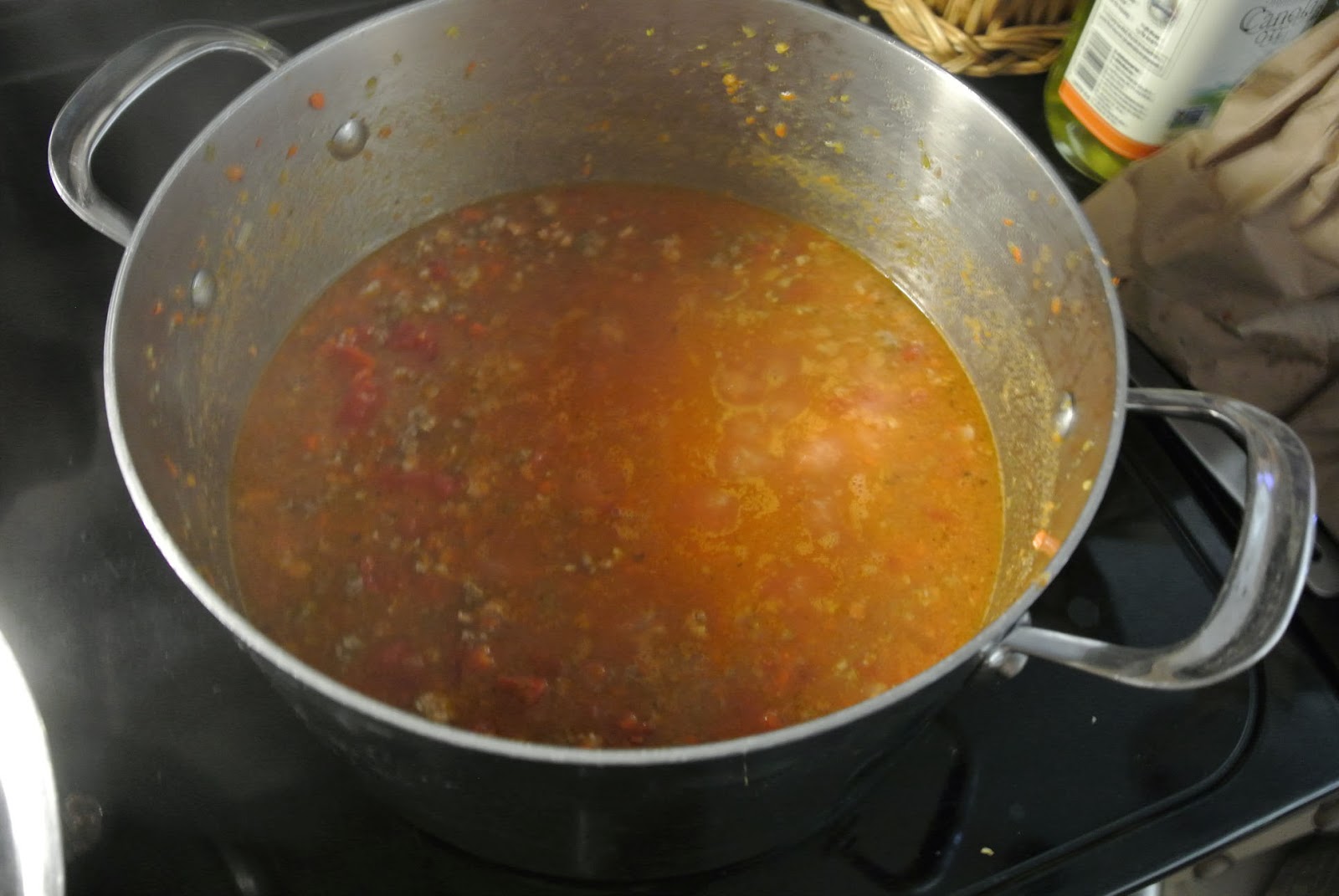
Add the chopped onions and cook until translucent while scraping up the brown bits. Add the black pepper and garlic and cook until the garlic is fragrant, about 30 seconds. Return the meat back to the sauce, add the drained diced tomatoes, tomato puree, and salt. Simmer for 1 hour.

Assemble the lasagna
If using chilled, premade sauce, let it sit out at room temperature for 20 - 30 minutes prior to using but you do not need to do this if you do not intend on baking the lasagna right away.

Adjust an oven rack to the middle position and heat the oven to 400 degrees.

Add the ricotta, cream, egg, salt, and pepper to the bowl of a food processor. Puree until smooth. Transfer to a bowl and mix in the chopped basil.

Mix the grated Parmesan and shredded mozzerella in a separate bowl and set aside.

Smear the bottom of a 9 x 13 inch baking dish with 1/4 cup of tomato sauce (avoiding large chunks of meat). Place 3 noodles on the bottom of the dish. Drop 3 tablespoons of the ricotta mixture in one tablespoon dollops along each noodle. Roughly spread the cheese mixture out on each noodle with the back of the spoon. Evenly sprinkle 1 cup of the grated mozzerella and parmesan mixture on top of the ricotta mixture. Then cover each noodle with 1/2 cup of meat sauce. Apply another layer of noodle and repeat the ricotta, mozzerella, meat sauce, and finally noodle again twice more. In the last ricotta layer, use up the remaining ricotta mixture.

Place the final layer of lasagna noodles on and cover with the remaining meat sauce. Then spread the remaining mozzerella mixture evenly over the top.

A cross-section of the lasagna will look like this:

Remaining mozz/parm
Remaining meat sauce
Noodle layer 3
Meat Sauce
Mozz/Parm
Ricotta
Noodle layer 2
Meat Sauce
Mozz/Parm
Ricotta
Noodle layer 1
1/4 cup sauce without meat

However, for a more photogenic lasagna with separate cheese and meat sauce layers, you can do something like this. Up to you, fresh lasagna never slices neatly anyway.

Remaining mozz/parm
Remaining meat sauce
Noodle layer 3
2x Meat Sauce
Noodle layer 2
2x Mozz/Parm
2x Ricotta
Noodle layer 1
1/4 cup sauce without meat


Bake uncovered at 400 degrees on the middle rack for 30 minutes. Depending on the oven, the top may brown faster than anticipated, if this happens, loosely cover the lasagna with a piece of foil and continue baking. Let it sit for 10 minutes at room temperature prior to slicing and serving.

If planning ahead, the lasagna can be kept in the fridge for 2 days. If freezing, wrap the dish tightly with plastic wrap, then wrap tightly with foil, and finally wrap tightly once more with plastic wrap. Thaw in the fridge for 24 - 48 hours. Make sure the center of the lasagna is not frozen prior to baking. After defrosting, let the lasagna sit at room temperature for an hour prior to baking.

Gently remove the foil when unwrapping because it can be used during baking. Gently drape the foil over the lasagna and bake at 400 degrees for 10 minutes then uncover and continue baking until the sauce is bubbly and cheese is spotty brown, approximately 25 - 35 more minutes.

Lasagna

Hearty Spaghetti and Meat Sauce

Spaghetti and Meat Sauce
(updated from archives)

I grew up on spaghetti with Ragu. Not the lowercase italicized ragu, but the capital R followed by a copyright sign Ragu. And it was Hunt’s more often than not since it was cheaper. As a child, I always wanted the meat flavor thinking that it sounded better than plain tomato. Then one day, I thought it was odd that there wasn’t actually any meat in the sauce. Upon further inspection, the sauce was merely “flavored with meat.” Gross.

When Steven and I first started dating (now nearly a decade ago, crazy right?), he made some spaghetti for me with his mom’s homemade meat sauce. The sauce had actual pieces of real meat, onions, chunks of tomatoes, and oh my god are those herbs?

This is also how Steven introduced me to cheese. Like many Chinese people, my family was very suspicious of cheese. Stinky tofu? Bring it on! Fermenting milk? Nooo thank you. But Steven eventually won me over with a little freshly grated parmesan on my pasta.

When I started cooking, I first learned how to brown meat and chop and saute an onion. I doctored up jarred spaghetti sauce with ground beef and onions. Then I bought my first jar of herbs, Spice Island Italian Herb Blend, and added some of that. I eventually switched the jarred, overly salty stuff to plain tomato sauce. Over the years, I added more and more ingredients like diced tomatoes and some red wine, and finally topped it off with some fresh basil. This recipe has come a long way.

Hearty Meat Sauce
2 Tablespoon olive oil
1 pound lean ground beef or mix of ground beef with Italian sausage
1 large onion, chopped fine
1/2 teaspoon salt
3 medium garlic cloves, minced or pressed through a garlic press
1/4 cup red wine
1/2 teaspoon ground black pepper
14 ounce can tomato puree
14 ounce can diced tomatoes, drained
1/2 teaspoon dried oregano

Pasta of your choice
1/2 cup fresh basil, chopped or chiffonade
1/2 cup grated parmesan for serving

Heat a tablespoon olive oil in a large saute pan or Dutch oven and brown the ground beef. Drain the fat through a fine mesh sieve and set aside.

Add a tablespoon of olive oil to the pot and heat over medium heat until shimmering. Add the onions and 1/2 tsp of salt and cook until softened. If the bottom of the pan is turning too brown, add a little bit of water and scrape up the bits as you go. Add the garlic and cook until fragrant, about 30 seconds. Add the wine to deglaze the pan and cook until the wine is completely gone. Add the tomato puree, drained diced tomatoes, pepper, and oregano.

Cook the sauce at a gentle simmer over low heat, partially uncovered for 2 - 3 hours or until the sauce is thicken and ground beef is tender.

Cook spaghetti according to package instructions

Serve over pasta, topped with basil and parmesan or use in lasagna

Spaghetti alla Carbonara

Spaghetti Carbonara

Carbonara is Steven's most requested dish. It's one of the few recipes on this blog that I make regularly, so I'm a little embarrassed I haven't updated the recipe since 2007. The ingredient list has stayed the same in the last four years but I added the trick of tempering the eggs with boiling pasta water before adding it to the pasta. On the rare occasion, I get a little fancy but I always go back to the original recipe of 5 ingredients, 6 if you include salt for pasta water. Traditionally you would use pancetta or guanicale, but let's face it, that stuff is expensive and I'm a poor student. Because this recipe is so simple, there are a few things I feel strongly about. First, I don't believe in adding cream; I think it's like cheating. But I unfortunately don't know anyone Italian who can back me up. Second, use freshly ground pepper; this is non-negotiable.

This recipe is one of our staples during medical school, because I can make this in less than 30, maybe even 20 minutes. I like to cook with ratios because it makes recipes easy to scale up or down. This recipe is no different and can be easily adjusted.

bacon

Spaghetti alla Carbonara
Approximately 4 ounces or 4 slices of thick-cut bacon, sliced into 1/4 inch wide strips or equivalent amount of pancetta or guanciale, chopped
2 eggs, beaten
2 ounces finely grated parmesan, parmigiano, or pecorino romano
1/2 tsp freshly ground black pepper (I go up to 1 teaspoon)
8 ounces spaghetti

Cook bacon in a skillet over medium heat until it is crisp. Remove with a slotted spoon and drain on a piece of paper towel.

Bring a large pot of water to a boil for the pasta. Salt it generously, it should taste like sea water. Cook spaghetti according to package instructions, until it is al dente.

Temper the eggs like making a custard. With one hand beat the eggs and with the other slowly drizzle approximately 1/4 cup of hot pasta water with a measuring scoop or cup into the egg mixture. Set aside.

Before draining the pasta, set aside about half a cup of the boiling pasta water to loosen the pasta if needed.

You'll have to move fast at this point. When the pasta is al dente, drain the pasta then return the pasta back into the hot pot. Keep the pot off heat. The residual heat in the pot and pasta will thicken the sauce. Add the drained bacon, ground pepper, pasta and with one hand, stir the pasta while pouring in the tempered egg mixture.

Keep stirring to mix the cheese and egg evenly and the sauce will be thickened and silky smooth. Add a bit of the pasta water if needed.

Optional: top with extra freshly ground pepper and grated cheese before serving.

Spaghetti Carbonara


March 2007

Braised Lamb Shanks and Saffron Pearl Couscous with Cranberries and Almonds

Braised Lamb Shank
I always feel like I’m committing a culinary faux pas braising in the middle of June. I try my best to keep things seasonal but it just doesn’t happen when lamb shanks are on sale. How can I say no when there's marrow involved? Lamb shanks have to be braised (I honestly can't think of any other way to cook a shank cut) but I refuse to turn on the oven for 4 hours so I put the Le Creuset to good use on the stovetop.

I tied the lamb shanks so they would keep their shape while cooking but it was futile. After about an hour of cooking, the shanks contorted out of the strings entirely. Same thing happened when I made Osso Buco. meh, oh well.

Red Wine Braised Lamb Shank
2 lbs lamb shanks, roughly 2 1/2 to 3 inches thick
1 medium onion, small dice
1 medium carrot, small dice
4 cloves garlic, minced
2 Tbsp tomato paste
3 - 4 large thyme sprigs
2 bay leaves
1 1/2 C dry red wine
Salt and freshly ground black pepper
Olive, vegetable, or canola oil
Water or chicken stock as needed
Chopped parsley or chiffonade basil for garnish

Salt and pepper the lamb shanks. Tie the shanks around the perimeter tightly with a piece of twine.

Heat 1 tablespoon of vegetable oil in a Dutch oven over medium high heat. Brown the lamb shanks on all sides, paying particular attention to the two flat sides. Remove the shanks and set aside.

Turn the heat down to medium and add the diced onion, diced carrots, and a large pinch of salt to the pan. Cook the vegetables, stirring occasionally and scrape up the brown bits, until they are translucent. Then add the tomato paste and minced garlic and cook for 30 seconds to a minute for the tomato paste to slightly caramelize. Return the shanks and any accumulated juices to the pan, and add the red wine, thyme, bay leaf, some more salt and pepper, and enough chicken stock or water to barely cover the shanks. Bring the contents up to a boil first then lower the heat to a bare simmer. Cover and cook for 3 - 4 hours or until the shanks are falling apart soft.

When the shanks have finished cooking, gently take them out of the pan and set aside. Take out the bay leaves and the thyme sprig. Turn the heat up to medium and reduce the sauce by half or until it is thick and syrupy. Serve the sauce on top of the lamb shanks and top with a little chopped basil or parsley if desired.


This was the perfect opportunity to cook up the Israeli or pearl couscous I got from Trader Joes. I hate how expensive (8 oz. for $3) this stuff is because I am seriously hooked! It looks so cute and bubbly and each grain, though it's more like a pasta than a grain, is more distinct and has more chew than regular couscous. While looking for a cheaper source, I found a few items on Amazon but I don't want 12 8oz. boxes or one 22 pound bag of it, so the search continues.

I cooked the couscous in a little chicken stock with saffron and added some cranberries and some toasted almonds but pine nuts would be just as good. Next time, I would chop up the cranberries so they can mingle better with the couscous. Steven was really skeptical about the cranberries with the saffron but it really works. The recipe on the back of the couscous box called for raisins so I didn't see why I couldn't sub some cranberries instead. I've never been a fan of raisins but I can eat dried cranberries by the handful. It's one of the few things I can justify buying at Costco. But if raisins are your thing, by all means use them.

Saffron Israeli Couscous with Cranberries and Almonds
serves 4

8 oz. (about 1 1/3 C) Israeli Couscous
1 3/4 C + more if needed chicken stock
Large pinch of saffron
1/4 C dried cranberries, chopped
1/4 C toasted almond slices or slivers or pine nuts
2 Tbsp chopped chives (or sub with parsley)
2 Tbsp chopped parsley
2 Tbsp butter
Salt and pepper to taste
Olive oil

Steep the saffron threads in 1/4 cup of hot but not boiling chicken stock for 15 - 20 minutes.

Bring the remaining half cup of chicken stock to a boil and set aside.

Heat 2 teaspoons of olive oil in a saucepan over medium heat. Add the couscous and toast until the pasta is golden brown. Turn the heat down to low and add the saffron liquid, hot chicken stock and some salt and pepper and simmer covered until all of the liquid has been absorbed and the couscous is soft with a slight chew, add more stock or water if necessary, about 12 minutes.

Off heat stir in the cranberries, herbs, and tablespoon of butter. Season with more salt and pepper if needed. Top with toasted almonds or pine nuts.


Mac and Cheese

Mac and Cheese
I’m a sucker for interesting pasta shapes. Even though the pantry is currently overflowing with pasta, I couldn’t pass the Barilla sale display without picking up a box of this cool pasta shape. Fusilli bucati corti are spring shaped noodles with a hollow center - way more interesting than rotini or regular fusilli. Now that I think about it, I don’t think I’ve ever used elbow macaroni for mac and cheese. It's just too boring.

I like making mac and cheese on the stovetop because I can control how cooked pasta is and keep the sauce from curdling. I've had sauce curdle on me in the past, which was so not tasty, and it's something I've been paranoid about ever since. I do miss seeing the mac and cheese come out all bubbly and browned from the oven with the toasty bread crumbs on top but it's a sacrifice I've come to terms with. Plus, we don't have a dishwasher and it's one less dish to wash. I just toast some bread crumbs with a little butter and some herbs either in a skillet or in the toaster oven; it's not the same but it's good enough.

The most important thing about mac and cheese is the cheese. Duh. Always use freshly grated cheese because the preshredded stuff is coated in questionable "non-clumping" agents that makes the sauce grainy. Today I used a combination of extra sharp white cheddar and some Parmesan but in the past I've used combination of Cheddar, Monterey, and/or Gruyere. I finished it off with a little splash of white wine, something I borrowed from cheese fondue recipes. Feel free to be creative with the extras. I recently picked up a bag of cooked and shelled langoustines from my local TJ's, which I'm guessing are like mini lobsters or crawfish? I threw some of those in but they are totally optional. You can use kielbasa, ham, Dungeness crab, or leave it plain. I tried to convince Steven to let me put some peas in but that endeavor was immediately shot down.

Mac and Cheese
serves 2 - 3 as entree, 3- 4 as appetizer

8 oz. pasta of your choice
3 slices regular or 2 slices thick cut bacon, cut into thin strips
1 shallot, minced
2 Tbsp flour
1 1/2 C milk, preferably whole
1 Tbsp Dijon mustard
4 oz cooked langoustines or whatever extras you feel like adding
Freshly ground black pepper
A little grating of nutmeg (optional)
1/4 tsp cayenne (optional)
2 C shredded extra sharp Cheddar
1/2 C shredded Parmesan or Gruyere
Salt

Cook the pasta according to your tastes for mac and cheese, al dente or soft, up to you.

While the pasta is cooking, start the sauce. If the pasta finishes cooking before the cheese sauce, drain the pasta and set it aside.

In a large saucepan or Dutch oven, cook the bacon over medium heat until most of the fat has rendered and it is beginning to crisp. Add the minced shallot and some salt and cook until the shallots have softened.

Add the flour and cook the flour until it is golden brown. Slowly drizzle in the milk while whisking. Make sure to whisk out all the clumps of flour.

Add the langoustines, Dijon, black pepper, nutmeg and cayenne if using, and whisk the bechamel until it has thickened and is bubbling. Stir in the white wine and turn off the heat.

Wait until the bechamel is no longer bubbling to add the cheese. Whisk until the sauce is smooth and then salt to taste. Stir in the pasta and serve.

Pasta with Fava Beans, Prosciutto, and Shaved Parmesan

Pasta with Proscuitto, Fava Beans, and Shaved Parmesan
Last Saturday Steven and I went to the U District Farmers Market with a mission: to find fava beans. I was hoping I would still be able to find some since it's usually a springtime crop. The Udist market is always extremely crowded but it's worth it just seeing the dozens of stalls selling farm fresh produce, organic eggs, artisanal breads, pastas, honeys, and so much more. After being distracted by all the overwhelming and sometimes unusual offerings (sea beans anyone?), I finally found the only stand that still sold fava beans. Whoo! Success! Since I was going through all trouble of shelling fava beans, I figured I might as well go all out and make some fresh pasta to accompany this special treat.

While the pasta dough was resting on the counter, I enlisted Steven's help and we began shelling the beans. Fava beans are a pain in the butt. First the beans needed to be zipped out of the fuzzy outer pod, which was easy enough. Then they are blanched in boiling water for a minute, dunked in ice water and finally, the bean must be peeled (thank goodness for fingernails) and squeezed out of the waxy outer layer. In the end we only got about a half cup of beans but they were really delicious - buttery, nutty, and sweet. I quickly sauteed them with just a tiny bit of garlic and tossed them with fresh pasta, olive oil, thin pieces of prosciutto and Parmesan shaving. It was labor intensive but it was quite the treat. Light and fresh, it was the perfect summer pasta dish.

For this dish, I would really recommend making or purchasing fresh pasta if possible but dried pasta will work in a pinch. I prefer wider noodles for this dish, like pappardelle, but the narrower tagliatelle and fettuccine are also good substitutes.

Pasta with Fava Beans, Prosciutto, and Shaved Parmesan

8 ounces wide pasta noodles (pappardelle, tagliatelle, fettuccine), preferably fresh
1 pound fava beans (also called broad beans, English beans, or Windsor beans)
2 cloves of garlic, minced
2 - 3 ounces prosciutto, cut into bite size pieces
2 ounces Parmesan (or Romano) cheese, shaved and 1 ounce grated (about 1/4 C)
Extra virgin olive oil
Squeeze of lemon juice
Salt and pepper

Shelling Favas:
First shell the beans from the fuzzy outer pod by opening it with your fingers. Bring a saucepan of water to a boil. Meanwhile prepare a bowl of ice cold water. Add the shelled beans and boil for a minute. Drain and plunge into ice water. When the beans are cold, drain them. Peel and slip the beans out of the waxy coating. Use your fingers to make an incision in the coating if needed. Place the shelled beans in a bowl and set aside.

Bring a large pot of water to a boil for pasta. If using fresh pasta, it will cook in 1 to 2 minutes, whereas dried pasta will take 9 - 11. Time your prep and cooking accordingly depending on which kind you use.

Heat 2 teaspoons of olive oil in a skillet over medium heat. Add the fava beans and garlic and season with salt and pepper. Cook until fragrant, about 1 minute and set aside.

After the pasta has finished cooking, toss the pasta with a tablespoon of extra virgin olive oil, the garlic sauteed fava beans, grated Parmesan, thin slices of prosciutto, and a squeeze of lemon juice. Add the Parmesan shavings on top and serve.

Serves 2


To make fresh pasta, I follow Marcella Hazan's recipe:

Fresh Pasta
1 C flour
2 large eggs

First make a mountain of flour on your work surface, then create a crater in the center. Add your eggs in the crater. Use a fork and beat the eggs in the crater incorporating a little bit of the flour at a time. Once the egg mixture begins to look like a batter, you can start incorporating more of the flour into the dough. After incorporating all the flour, you will end up with a dough. If the dough is still sticky, add some more flour. Knead by pushing with the heel of your palm, fold the dough in half, give it a half turn, and repeat the process for 8 minutes or until it feels smooth. Marcella did not specify to let the dough rest but I let the dough rest (covered) for 20ish minutes.

Cut the dough into 3 equal portions. Take one portion of the dough and press it flat, then run it through the pasta machine on the widest setting. Fold the dough in thirds and run the narrow end into the machine again. Repeat twice more. Do this to the remaining 2 portions of dough. Now you should have 3 portions of dough that have been passed through the widest setting 3 times each. Go up one setting, and run each portion of dough through twice, but do not fold in thirds this time, just run it straight through twice. Repeat with the two other pieces of dough. Go up one setting, and repeat again. My machine has 7 settings and I stopped on setting #3 for fettuccine because I want my noodles a little on the thicker side. After running the pasta through the #3 setting twice more, run it through the fettuccine cutter (the wider cutter). Separate any noodles that did not get cut all the way through. Lightly toss the noodles in some flour.

Bring a pot of water to a boil, salt the water, then add the pasta. Cook for 1 1/2 - 2 minutes or until the pasta is al dente. Drain the pasta reserving some of the pasta water to thin out the sauce if necessary.

Fettuccine Alfredo

Fettuccine Alfredo

Steven recently mentioned something about me making a "good kitchen purchase" (I can't remember what he was referring to) so I asked him what he thought was a "bad" purchase. I personally think all of my kitchen items are great and can't-live-without necessary. That madeleine pan? Yup, absolutely essential, how else am I going to make madeleines, right? ;) He thought for a moment, I'm not sure if he realized he was treading on thin ice here, and said, "pasta machine." I gasped, I protested, but, as much as I hate to admit it, he was right. Ever since I made bought it many months ago, I had only used it once. Instead of trying to justify why I needed a pasta machine, I made it a personal mission to make good use of it and created a long list of fresh noodle and pasta dishes I planned to make. I have to stand up for my gadgets after all, and yeah, I also do want to prove Steven wrong, but he can't complain because he reaps the delicious benefits of handmade pasta.

This was my first time making fresh pasta so I reached for my copy of Essentials of Classic Italian Cooking cuz you can't go wrong with Marcella Hazan for Italian. I kept it simple and made the classic alfredo sauce. In the past I've tried to make alfredo reasonably healthy because all that cream, butter, and cheese is a little alarming. My light version was a roux, milk, and cheese, essentially a bechamel and parm (or a Mornay). It was alright, but that's all it was, a bechamel with parm, it was not alfredo sauce. Since I was going through the trouble of making my own pasta this time, I didn't hold back. This isn't something I would make everyday, but when I do choose to indulge, there's no reason to skimp right?

Mmm... cream, butter, and cheese, deeeelicious.

Fettuccine Alfredo
Serves 2 - 3 as a main dish, 3 - 4 as an appetizer

Fresh Pasta
1 C flour
2 large eggs

First make a mountain of flour on your work surface, then create a crater in the center. Add your eggs in the crater. Use a fork and beat the eggs in the crater incoroporating a little bit of the flour at a time. Once the egg mixture begins to look like a batter, you can start incorporating more of the flour into the dough. After incoporporating all the flour, you will end up with a dough. If the dough is still sticky, add some more flour. Knead by pushing with the heel of your palm, fold the dough in half, give it a half turn, and repeat the process for 8 minutes or until it feels smooth. Marcella did not specify to let the dough rest but I let the dough rest (covered) for 20ish minutes.

Cut the dough into 3 equal portions. Take one portion of the dough and press it flat, then run it through the pasta machine on the widest setting. Fold the dough in thirds and run the narrow end into the machine again. Repeat twice more. Do this to the remaining 2 portions of dough. Now you should have 3 portions of dough that have been passed through the widest setting 3 times each. Go up one setting, and run each portion of dough through twice, but do not fold in thirds this time, just run it straight through twice. Repeat with the two other pieces of dough. Go up one setting, and repeat again. My machine has 7 settings and I stopped on setting #3 for fettuccine because I want my noodles a little on the thicker side. After running the pasta through the #3 setting twice more, run it through the fettuccine cutter (the wider cutter). Separate any noodles that did not get cut all the way through. Lightly toss the noodles in some flour.

Bring a pot of water to a boil, salt the water, then add the pasta. Cook for 1 1/2 - 2 minutes or until the pasta is al dente. Drain the pasta reserving some of the pasta water to thin out the sauce if necessary.

Alfredo Sauce (enough to dress the pasta made from the above recipe)
1/2 C heavy cream
1 Tbsp butter
1/2 C grated parmigiano-reggiano + additional if needed at table
Pinch of ground nutmeg
Freshly ground black pepper and salt to taste

Simmer the cream, butter, and nutmeg in a saucepan over low heat until it has thickened somewhat, about 5 minutes.

Toss the pasta in the cream, add the grated cheese and toss until evenly distributed. If the sauce is too thin, add a little of the pasta water. Add freshly ground black pepper and salt to taste, add additional cheese on top at the table.

Chicken Tetrazzini

Chicken Tetrazzini
Steven: "Why do you have to call it a casserole? Why can't you call it something else?"

Me: "Like what?"

Steven: "I don't know... noodle bake with chicken and mushrooms and... sauce."

Me: "Well it's called Tetrazzini but it's still a casserole."

Steven: *grumble grumble*

I made this a few days after I made my green bean casserole to see if I could change Steven's mind about the dreaded "casserole." Of course he remained convinced that casserole is just a code word for bad cooking. Sadly, casseroles have a bad rap, conjuring up the image of overcooked noodles, bland meats, mushy vegetables, and greasy sauces. With proper execution, however, they can be refined and sophisticated, and at the same time homey and comforting - the best of both worlds. Although Steven couldn't escape the fact that this was technically a casserole, he didn't deny that it was darn tasty.

Now fast forward to a few weeks later. As I'm writing this, I turned to him and asked, "Do you like casseroles now?"

"Eh... they're okay."

Alright! Makin' progress! Next up, cheesy tater tot bake anyone? ;)

Notes
- This is great for leftover roast chicken (like rotisserie chicken) or leftover Thanksgiving turkey
- To avoid the culinary atrocity that is mushy noodle, cook the noodles 2 minutes short of the recommended package time. If they finish cooking before you have finished preparing the sauce, shock them in ice water to stop them from continuing to cook.
- And to prevent the second culinary atrocity that is overcooked vegetables, I add the broccoli florets at the end. I cut them into small bite sized pieces and the residual heat of the sauce and the oven time will be enough to cook them.
Chicken Tetrazzini
Serves 8

Bread crumb topping
3/4 C fresh bread crumbs
1 Tbsp butter, melted
1/3 C sliced almonds

Pasta
6 Tbsp butter
1 lb crimini or white button mushrooms, sliced
1 large onion, chopped fine
4 cloves of garlic
1 Tbsp fresh thyme leaves
1/4 C white wine
salt and black pepper
16 oz. linguine or spaghetti
4 Tbsp flour
3 C chicken stock
1/4 C heavy cream
1 C grated Parmesan
2 tsp lemon juice
1 - 1 1/2 C frozen peas or 1 C broccoli florets chopped into very small bite sized pieces
4 C shredded cooked chicken meat or turkey

Prepare the bread crumbs. Preheat the oven to 350 degrees F.

Pulse the bread a few times in a food proecessor to make fresh bread crumbs. Toss the bread crumbs with a tablespoon of melted butter and spread in a even layer on a baking pan. Bake for 10 - 15 minutes in a 350 degree oven or until they are light golden. Set aside for later.

Preheat the oven to 450 degrees F.

Heat 2 Tbsp of butter in a skillet over medium heat and add chopped onion and a little salt, cook until softened. Add the mushrooms, some salt and pepper, and cook until the mushrooms release their liquid and the liquid evaporates. Add the garlic and thyme and cook until fragrant, about 30 seconds. Add the white wine and cook until reduced. Set this mixture aside.

Meanwhile, bring a large pot of water to a boil. Break the pasta in half lengthwise and boil 2 minutes short of the package time for al dente. If your noodles finish before you are done before you finish preparing the sauce, shock them in ice water and set them aside to drain.

In a large saucepan or Dutch oven, melt the remaining 4 Tbsp of butter over medium heat. Add the flour, whisk and cook until the roux is golden and smells nutty. Add the chicken stock in a steady stream while whisking, making sure to get out any lumps. Season with salt and pepper and simmer the mixture until it has thickened, about 5 minutes. Take the pot off heat and whisk in the heavy cream and lemon juice. Add the broccoli florets or frozen peas, the mushroom onion mixture, the Parmesan, and noodles to the mixture, stir to evenly combine.

Transfer the mixture into a 9 x 13 baking dish, top with bread crumbs and almond slices and bake for 12 - 15 minutes until the bread crumbs and almonds are golden brown and the mixture is bubbly.

You can cut the recipe in half or make the full recipe and freeze half (though I have not tried freezing it).


Italian Sausage and Mozzarella Pasta Bake

Pasta Bake

This photo has been sitting in my Flickr for a while now so it's about time I post the recipe. I have a weak spot for extra cheesy dishes and this one has a whopping 1:1 ratio of pasta to mozzarella. The best part is how each scoop pulls away never-ending tendrils of gooey, melty cheese.

A note:
Leave the pasta boil the pasta two minutes short of al dente because it will finish cooking in the oven. If you boil it to al dente, it will overcook in the oven.

Italian Sausage and Mozzarella Pasta Bake
serves 3 - 4

8 oz. pasta (penne, cellantani, farfalle, campanelle)
2 Italian sausages, removed from casings
1 small onion, finely chopped
2 garlic cloves, minced or pressed
1/4 C red wine
1 14oz. can diced tomatoes, drained
1 8 oz. can tomato sauce
1 tsp Italian herb mix
1/8 tsp sugar
Salt and pepper to taste
2 tsp olive oil
8 oz. mozzarella, cut into 1/2 inch cubes (preferably fresh mozzarella)
1/4 C grated Parmesan


Preheat the oven to 400 degrees F. Bring a pot of water to a rolling boil and boil the pasta to 2 minutes short of the recommended time.

Meanwhile, heat a teaspoon of olive oil in a large saucepan or Dutch oven over medium heat. Add the Italian sausage and break into bite size pieces. When the sausage has browned, remove and set aside. Add the onion and some salt and pepper, and cook over medium heat until the onions have softened, then add the Italian sausage back in. Add the minced garlic and cook until fragrant, about 30 seconds. Add 1/4 C red wine and cook until almost evaporated. Add the drained diced tomatoes, tomato sauce, and herbs, and a little sugar to taste. Simmer until slightly thickened, about 5 minutes. Season with salt and pepper.

Add the pasta to the sauce and toss to combine. Add half of the mozzarella and mix it into the pasta. Transfer to a 2 quart baking dish. Top with the remaining half of mozzerella cubes and grated Parmesan. Bake until bubbly and lightly browned, about 10 to 15 minutes.

Chicken Parmesan

Chicken Parmesan

Crunchy chicken, gooey spotty brown cheese, pasta and tomato sauce with basil plucked fresh off the plant, how can you go wrong? It's been a while since I've made Chicken Parmesan and I had forgotten how easy and quick it was to make. The whole meal took less than 30 minutes and drew raves from Steven, my most scrutinizing critic. It was absolutely delicious over a hearty plate of spaghetti but I imagine it would make a fantastic sandwich too.

Note:
- For the chicken cutlets, you can either take 2 large chicken breasts and slice them in half horizontally for 2 thin cutlets that require no pounding, or take 4 small chicken breasts and pound them evenly. Before pounding the chicken, remove the tenderloins since they tend to fall off very easily during pounding or cooking. You can reserve these tenderloins for chicken stir fry.

Chicken Parmesan (Parmigiana)
4 chicken cutlets (see note)
Salt and pepper
3 Tbsp flour
1 large egg, beaten
1 1/2 C panko bread crumbs
3/4 C coarsely grated mozzarella cheese
1/4 C grated Parmesan cheese
16 oz. pasta (Spaghetti or Linguini)

Quick Tomato Sauce
2 - 3 cloves of garlic, minced or pressed
2 Tbsp olive oil
28 oz. diced tomatoes or whole tomatoes crushed
1 small onion, finely diced
1/2 tsp dried Italian herb mix
1/4 tsp sugar
1/2 C basil leaves (optional)
Salt and pepper to taste

Making the Sauce: Heat olive oil over medium heat in a large saucepan or Dutch oven and add the onions. Cook until the onions are soft and translucent, then add the garlic and cook until fragrant, about 30 seconds to a minute. Add the tomatoes, dried herbs, sugar, black pepper and simmer until the sauce thickens. Salt to taste. Keep warm and set aside.

Begin boiling water for the pasta. Meanwhile, beat the egg, and prepare two trays for the flour and the panko bread crumbs.

Salt and pepper the chicken cutlets. Lightly dredge them in flour, patting off the excess, then dip into the beaten egg, then press and coat both sides with panko. Set aside until all cutlets are breaded.

Preheat broiler (I used my toaster oven). Add your pasta and some salt to the boiling water. Cook the chicken while the pasta is boiling.

Heat 2 tbsp of vegetable oil in a nonstick skillet over medium high heat. Pan fry the chicken cutlets until both sides are golden brown, about 2 - 3 minutes per side.

Transfer the chicken cutlets onto a tray lined with a wire rack. Mix the mozzarella and Parmesan together and cover each cutlet with some cheese. Broil until the cheese is melted and spotty brown.

Meanwhile drain the pasta when it is finished. Roughly chop or tear the basil leaves and stir them into the sauce. Transfer the pasta and chicken to plates and spoon the sauce on top.